

01
Your scenarios, not a generic case study
We talk to participants and their managers first. The conversations they dread become the practice material.
Workshops, cohorts and 1:1 coaching across the US, India, the Middle East and Southeast Asia.

Why most training fades
Two good days of training. Then back to the same calendar.
Six weeks later. The binder's in a drawer.
We start at the other end. What should this manager handle better next quarter, and who'll notice?
Gallup found manager engagement fell to 22% in 2025, with the steepest drop in South Asia (Gallup). Gartner reports traditional lectures and seminars actually had a negative effect on leadership outcomes (HR Dive on Gartner).
How we build ours
01
We talk to participants and their managers first. The conversations they dread become the practice material.
02
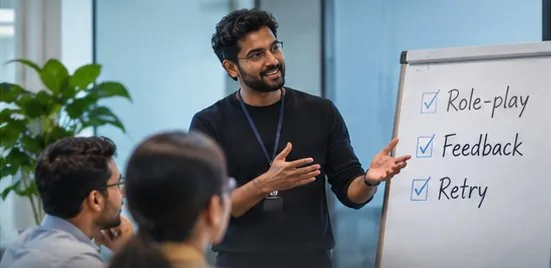
At least half of every session is rehearsal: role-plays, live feedback, a second attempt straight away.
03
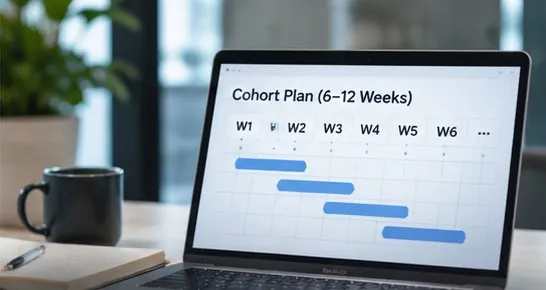
Cohorts run across 6 to 12 weeks, with short assignments back on the job between sessions.
04
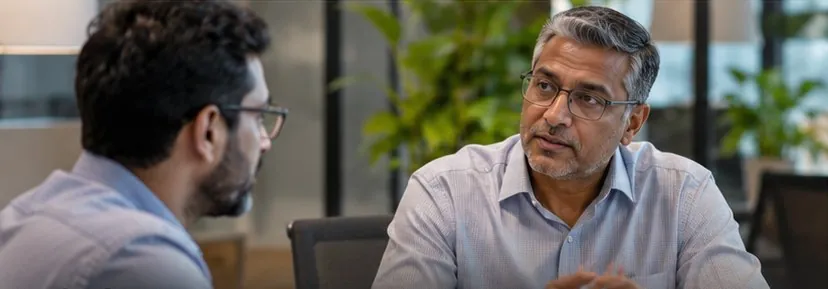
Goals agreed with their own manager before, progress reviewed with them after.
05
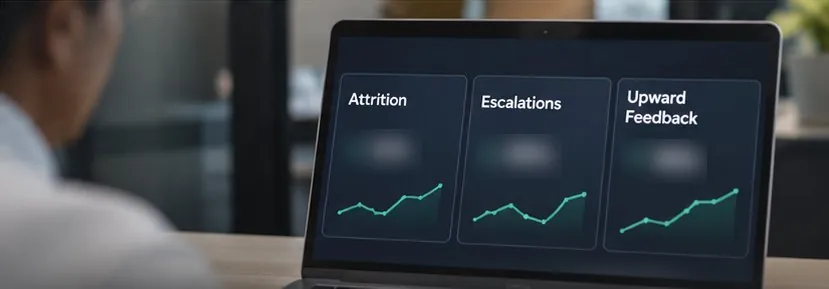
One to three outcomes you already track, such as attrition, escalations or upward feedback.
Leadership programmes
Every programme runs as a cohort, a custom build for one organisation, or alongside 1:1 coaching. Durations are our standard formats; we fit them to your calendar.

The hardest promotion is the first one. Last month they did the work. Now they get it done through other people, often former peers.

For managers who've been doing it a while and still avoid the hard conversations, or have them badly.

Most change fails in the middle, where managers explain decisions they didn't make. AI rollouts make it harder, because people worry about their jobs.

Our signature programme for senior leaders, built on the Bates ExPI™ assessment across 15 facets of character, substance and style. Led by Master Facilitator Yateen Gharat: 34 years, 3,500+ workshops.

For leaders whose team, boss or client sits in a different country: India GCC leaders reporting to HQ, delivery leaders facing onshore clients, expat managers in the Gulf.

64% of leaders rate setting strategy as critical, but only 37% were trained in it (DDI, 2025).

For high-potentials before their next big step. In the Gulf, for national hires growing into the supervisory roles quotas now require.

For people who lead on the floor: shift supervisors, store managers, charge nurses, field team leads. Run in person, because that's what works for frontline leaders.

71% of leaders report a significant rise in stress, and 40% of those have considered leaving leadership altogether (DDI, 2025).

Some problems don't belong in a classroom. Coaching runs through a curated network of independent executive coaches, matched to the leader and the problem.
Communication programmes
Most communication problems at work aren't about vocabulary. People bury the point, avoid the hard sentence, or present data nobody asked for.

Turning "here's what we did" into "here's why it matters to you". For people who present to customers or leadership and keep losing the room.

For people who are right about the numbers and still can't get anyone to act on them.
Answer first, then the reasoning, then the detail if anyone asks. Simple to say. Most people need practice to do it under pressure.

Getting things done when you don't have authority over the people you need.

The conversation everyone has been putting off for three weeks.

Empathy, complaints and service recovery for teams whose customers are already upset when they call. Owning the problem rather than reading a script.
Most negotiation training is built for big deals. Ours also covers renewals, scope changes and price pressure.

Emails, updates and documents people can read once and act on. Includes using AI writing tools without sounding like everyone else.
Use cases by industry
A charge nurse with 30 direct reports and a GCC engineering manager whose boss is nine time zones away both need to get better at feedback. The conversations they're avoiding are completely different. These are situations we design for, not past case studies.
GCC mandates have moved from execution to ownership, but leadership roles mostly haven't: 80% of GCCs say less than 10% of their leadership roles sit in India.
Source: Nasscom-Zinnov, 2026EY, 2025




How an engagement runs
45 minutes: what's going wrong, for whom, and which number should move.
1 to 2 weeks. We interview 4 to 6 participants and their managers.
A plan, the practice scenarios and the measures. You sign it off first.
Workshops, cohorts and coaching, in person or live online.
Check ins at 30, 60 and 90 days, plus a guide for participants' managers.
What moved against the agreed measures, and what didn't. We report both.
| Format | Best for | Typical size |
|---|---|---|
| In person workshop | Frontline teams, senior offsites, heavy role play | 12 to 20 per batch |
| Live virtual sessions | Distributed teams, short skill modules | 8 to 16 per session |
| Blended cohort | Manager development over 6 to 12 weeks | 15 to 25 per cohort |
| Small group coaching clinic | Applying skills to live situations | 4 to 6 |
| 1:1 executive coaching | Senior leaders and critical transitions | Individual |
The fourth one takes longer and depends on things outside the training room. We'd rather say that upfront than promise an ROI figure we can't stand behind.
FAQ
Yes. The smallest useful batch is around 8 people. Below that we'd usually suggest small group coaching.
We use proven frameworks where they help, like Bates ExPI™ in ELP. Scenarios and role plays are built from your organisation during discovery.
About 6 hours: 45 minute interviews with 4 to 6 participants and managers, plus one design review.
Yes, and it's often the right call. We pair Leading Change with our AI programmes.
Senior facilitators and executive coaches from our network. You meet the lead facilitator before you sign off the design. Meet the bench.
It depends on cohort size, format and custom design. We send a fixed quote after the scoping call.
That's usually the best place to start. A 45 minute call is enough to tell you whether we can help, and roughly what it would take.